
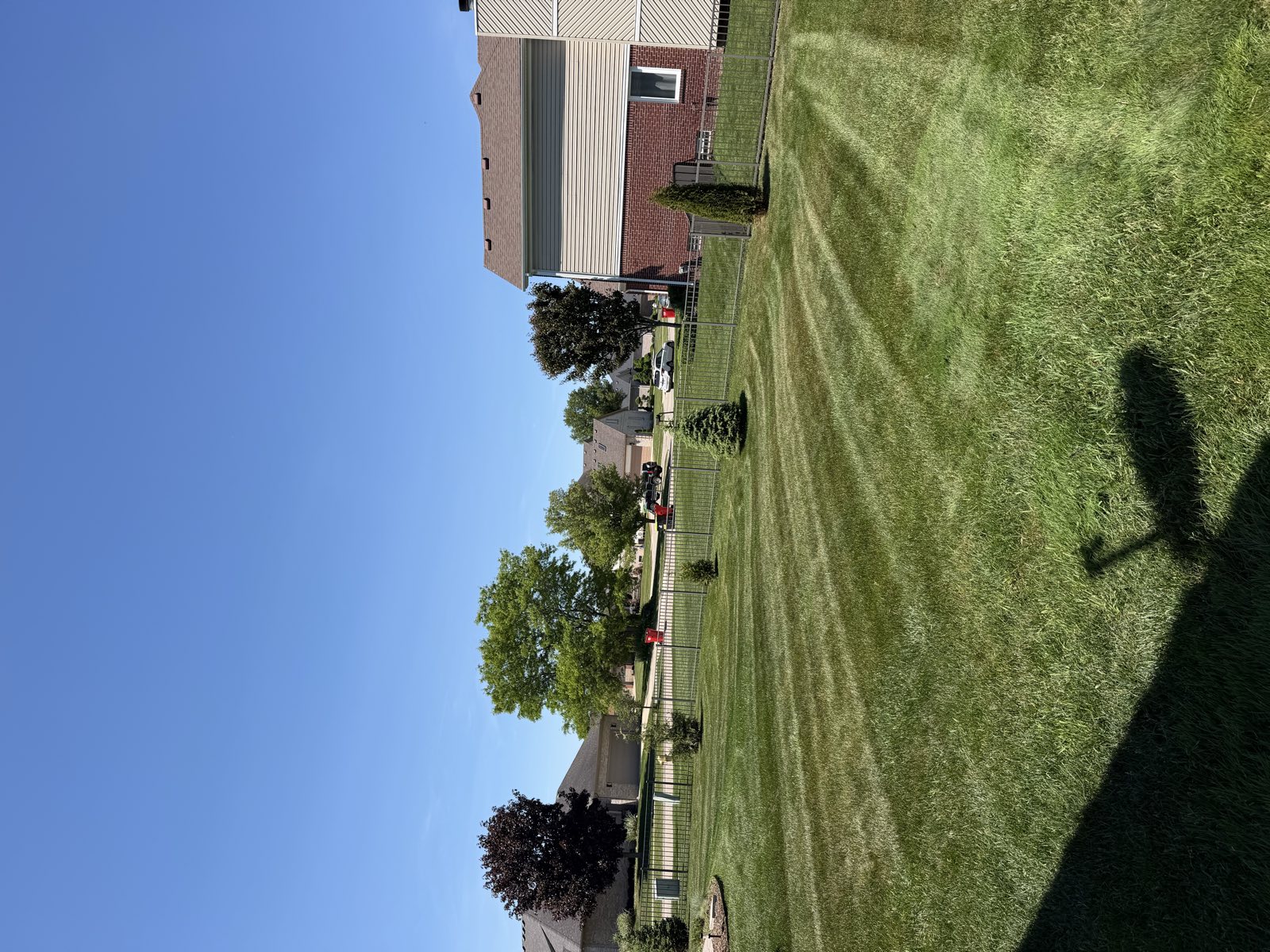
How Often Should You Mow Your Lawn in Michigan?
"How often should I mow?" sounds like a simple question, but the honest answer changes throughout a Michigan growing season. Mowing on a fixed schedule regardless of conditions is one of the most common reasons lawns look inconsistent from month to month.
The One-Third Rule
The general standard for healthy mowing is to never cut more than one-third of the grass blade's height in a single mow. Cutting more than that stresses the grass, exposes more of the stem to sun and heat, and can shock the root system — which is exactly what causes a lawn to look pale or patchy right after a mow instead of clean and healthy. In practice, this rule matters more than a fixed day-of-the-week schedule, because it means how often you should mow depends on how fast the grass is actually growing.
Spring: Growth Ramps Up Fast
Cool-season grasses common in Michigan lawns grow quickly in spring as temperatures rise and rainfall is typically plentiful. This is usually the season that needs the most frequent mowing — often weekly, sometimes closer to every 5 days during the fastest growth stretches in May.
Summer: Slower Growth, Taller Cut
Once summer heat sets in, especially during dry stretches, grass growth slows down. This is also when cutting height should go up, not down — taller grass shades its own root system and holds moisture better, which helps a lawn survive heat stress. Weekly mowing is often still right, but at a taller cutting height than in spring.
Fall: Back to Frequent, Then Tapering Off
Cooler temperatures and fall rain often bring a second growth spurt, so mowing frequency typically picks back up in September and early October. As growth slows heading into November, mowing frequency naturally tapers off until the season ends.
Signs You're Mowing on the Wrong Schedule
- Visible clumps of clippings after mowing — usually means you waited too long between cuts
- A lawn that looks pale or stressed right after mowing — often a sign of cutting too short
- Uneven patches of taller grass — usually inconsistent mowing frequency rather than a soil problem
This is exactly why a professional weekly lawn care plan tends to produce a more consistent-looking lawn than DIY mowing on a fixed calendar — the schedule and cutting height adjust to the season rather than sticking to the same routine year-round. For more on keeping a lawn healthy through the whole growing season, see our Michigan homeowner's guide to a healthy lawn.
Let us handle the mowing schedule.
Weekly lawn care, sized to your property.